
The Chapan as Memory
The chapan has always meant more to me than simply clothing. It carries warmth, protection, and memory, but also a sense of dignity, beauty, and belonging. In Kyrgyz life, it was worn in the mountains, on the road, and through winter, becoming part of everyday life as well as family memory.
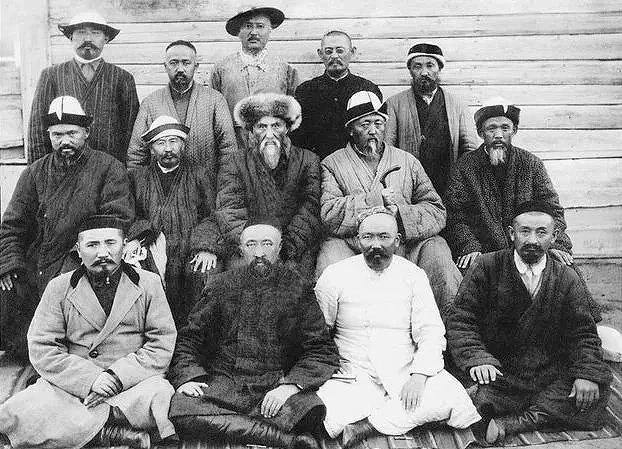
For me, the chapan is deeply personal. In this archival photograph taken in 1929, my great-great-grandfather on my mother’s side, Chyngysh Aji, sits in the center wearing a traditional Kyrgyz tebetey (a national headdress). Many of the men, including my great-great-grandfather, are dressed in quilted chapans. They were respected and influential figures of their time, men whose opinions the community valued and whose influence made them targets of Soviet repression. The photograph was taken during the period of their exile to Siberia, ordered by the Soviets and the campaign to dispossess the wealthy elite. Amidst collectivization, Kyrgyz leaders were stripped of their property and subjected to persecution. Chyngysh Aji had already been exiled to Siberia twice during the Tsarist era. Upon returning from one of those exiles, he established ties with Siberian merchants and later built a first soap factory in Naryn region. He was exiled a third time during the Soviet era Stalin’s repressions and returned from this final banishment gravely ill. This photograph reminds me that the chapan was never merely an abstract symbol. It belonged to real people and was part of the history they lived, a history that demanded immense strength of spirit to endure.
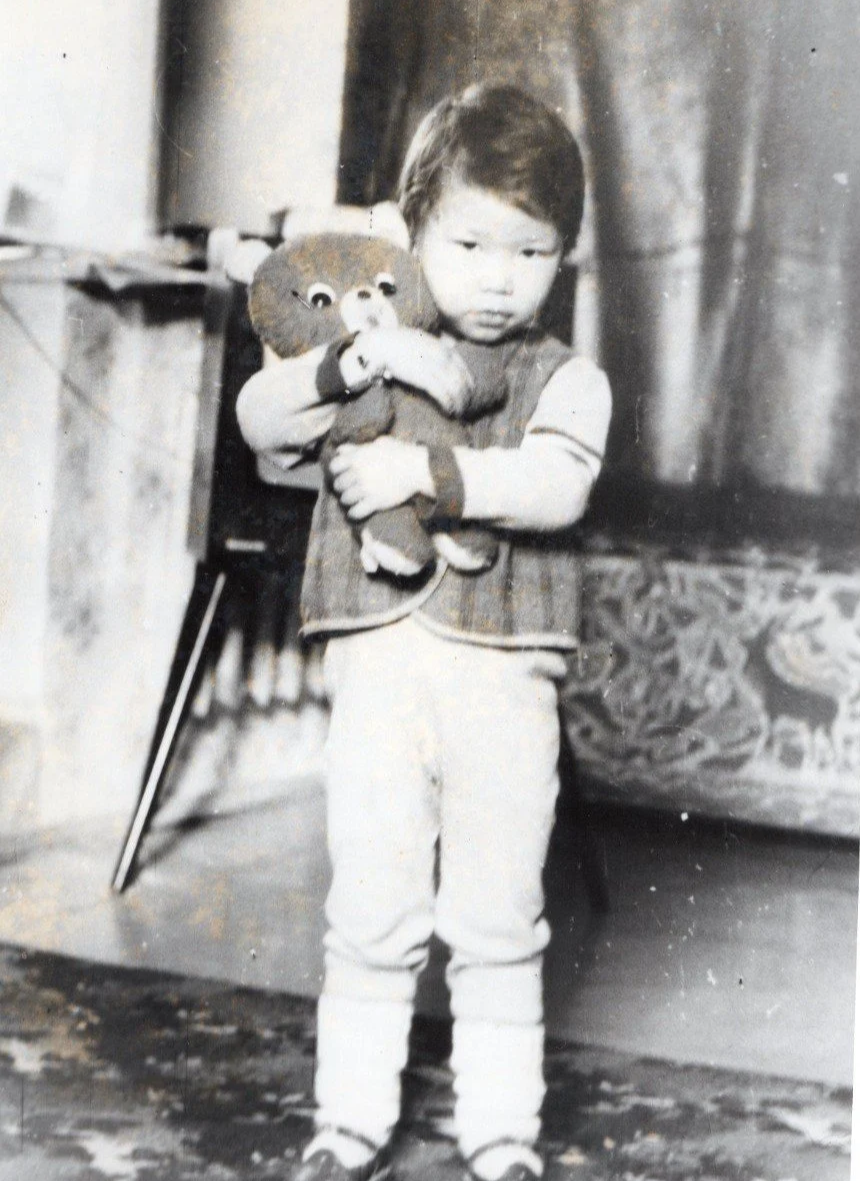
There is another family photograph of me as a child, wearing a traditional sleeveless chyptama. Behind me, in an otherwise Soviet apartment interior, stands a sandyk, a traditional heritage chest, decorated with the image of a deer. Bugu, the deer, is the name of my tribe. I return often to that image because it holds so much of what I want to preserve: the quiet survival of Kyrgyz memory inside ordinary domestic life, and the way ancestry remains present in garments, objects, and symbols, even when everything around them changes.
For me, speaking about the chapan is a way of honoring that continuity. It also reminds me that behind such influential men stood remarkable women, whose hands made these garments and whose skill, labor, and artistry shaped everyday life in ways history does not always record. The chapan is not only a garment, but a vessel of memory, care, and cultural presence. Each piece carries the warmth of the woman who made it, the mastery of her craft, and the story woven into every stitch.
About
El Jurt is a curated collection of nomadic crafts and cultural objects from Kyrgyzstan.
The project was founded by Ainura Kasmalieva, who grew up deeply connected to the traditions, aesthetics, and spirit of the nomadic world. Through El Jurt, she brings together pieces made by local artisans - objects that carry memory, craftsmanship, and a sense of place.
Each item is chosen not only for its beauty, but for the story it holds: traditional techniques, cultural symbolism, and the human hands behind it. Many of these objects are still made using practices passed down through families over generations.
El Jurt is more than a shop. It is a small bridge between cultures, a way of sharing the beauty, philosophy, and living heritage of nomadic life with the modern world.
Contact us
Interested in working together? Fill out some info and we will be in touch shortly. We can’t wait to hear from you!